

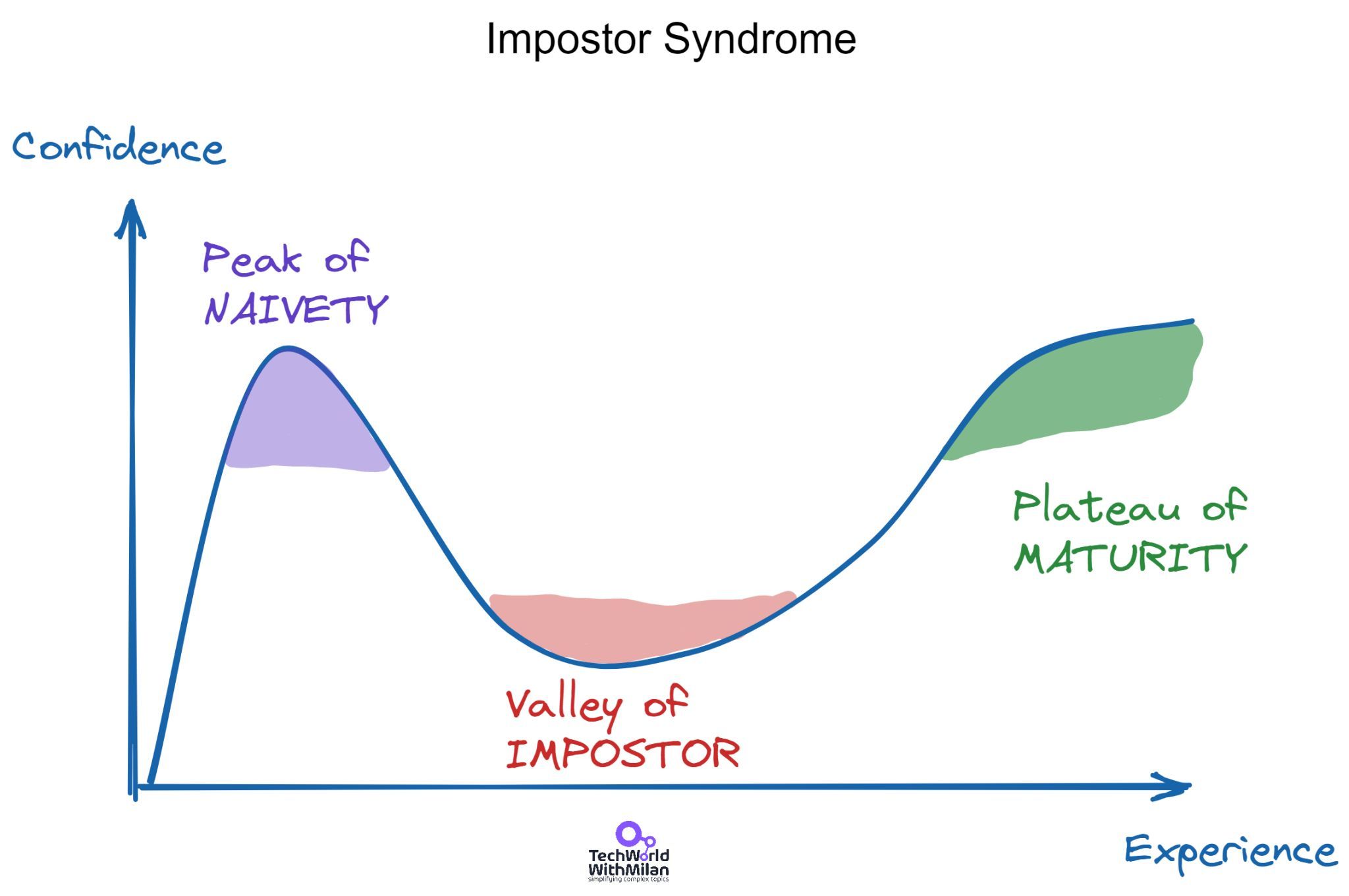
We could say that everyone in the complex field of software engineering had been hit by
impostor syndrome, at least once in their career. It is especially felt with high-achievers. Impostor syndrome is the 𝗶𝗻𝗮𝗯𝗶𝗹𝗶𝘁𝘆 𝘁𝗼 𝗮𝗰𝗰𝗲𝗽𝘁 𝘁𝗵𝗮𝘁 𝘆𝗼𝘂𝗿 𝗱𝗮𝗶𝗹𝘆 𝗲𝗳𝗳𝗼𝗿𝘁𝘀 𝘁𝗼 𝗹𝗲𝗮𝗿𝗻 𝗮𝗻𝗱 𝗮𝗱𝘃𝗮𝗻𝗰𝗲 𝘆𝗼𝘂𝗿 𝘁𝗮𝗹𝗲𝗻𝘁𝘀 𝘀𝗵𝗼𝘂𝗹𝗱 𝗺𝗮𝗸𝗲 𝘆𝗼𝘂 𝗱𝗲𝘀𝗲𝗿𝘃𝗶𝗻𝗴 𝗼𝗳 𝗮𝘁𝘁𝗲𝗻𝘁𝗶𝗼𝗻 𝗼𝗿 𝗸𝗲𝗲𝗽𝗶𝗻𝗴 𝘆𝗼𝘂𝗿 𝗽𝗼𝘀𝗶𝘁𝗶𝗼𝗻. Instead, it could give you the impression that you're deceiving people into thinking you're better at your job than you are (“I’m not good enough to be a senior engineer.”). A faker who has no right to be there.
While it could make sense at the start of a career, later it could be a burden. Even though you're a
senior engineer, 𝗶𝘁 𝗱𝗼𝗲𝘀𝗻'𝘁 𝗺𝗲𝗮𝗻 𝘆𝗼𝘂 𝗵𝗮𝘃𝗲 𝗮𝗻𝘀𝘄𝗲𝗿𝘀 𝘁𝗼 𝗮𝗹𝗹 𝗾𝘂𝗲𝘀𝘁𝗶𝗼𝗻𝘀. In software engineering,
there is often a high level of pressure to perform at a high level, to be productive, and to keep up with new technologies and tools. This can lead to feelings of inadequacy and self-doubt, which are common symptoms of impostor syndrome.
Additionally, impostor syndrome 𝗰𝗮𝗻 𝗹𝗲𝗮𝗱 𝘁𝗼 𝗯𝘂𝗿𝗻𝗼𝘂𝘁, 𝘀𝘁𝗿𝗲𝘀𝘀, 𝗮𝗻𝗱 𝗮𝗻𝘅𝗶𝗲𝘁𝘆, which can have serious consequences for a software engineer's physical and mental health.
How we can improve things here:
𝟭. 𝗥𝗲𝗰𝗼𝗴𝗻𝗶𝘇𝗲 𝗶𝘁: The first step in dealing with impostor syndrome is to recognize that you're experiencing it. Be honest with yourself about your feelings and don't be afraid to talk about them with someone you trust.
𝟮. 𝗖𝗵𝗮𝗹𝗹𝗲𝗻𝗴𝗲 𝘆𝗼𝘂𝗿 𝘁𝗵𝗼𝘂𝗴𝗵𝘁𝘀: Impostor syndrome is often driven by negative self-talk and self-doubt. Challenge those thoughts by asking yourself if they're based on fact or your perceptions. Look for evidence that supports your competence and achievements.
𝟯. 𝗦𝗵𝗮𝗿𝗲 𝘆𝗼𝘂𝗿 𝗲𝘅𝗽𝗲𝗿𝗶𝗲𝗻𝗰𝗲: Talking about your feelings with others who have experienced impostor syndrome can help you feel less alone. You may also find it helpful to seek out a mentor or coach who can provide guidance and support.
𝟰. 𝗖𝗲𝗹𝗲𝗯𝗿𝗮𝘁𝗲 𝘆𝗼𝘂𝗿 𝘀𝘂𝗰𝗰𝗲𝘀𝘀𝗲𝘀: It's important to recognize and celebrate your successes, no matter how small they may be. Make a habit of acknowledging your achievements and giving yourself credit for your hard work.
𝟱. 𝗙𝗼𝗰𝘂𝘀 𝗼𝗻 𝗹𝗲𝗮𝗿𝗻𝗶𝗻𝗴 𝗮𝗻𝗱 𝗴𝗿𝗼𝘄𝘁𝗵: Instead of worrying about being perfect, focus on learning and growing. Embrace challenges and view mistakes as opportunities to learn and improve.
𝟲. 𝗗𝗼𝗻'𝘁 𝗰𝗼𝗺𝗽𝗮𝗿𝗲 𝘆𝗼𝘂𝗿𝘀𝗲𝗹𝗳 𝘁𝗼 𝗼𝘁𝗵𝗲𝗿𝘀: This is the source of all unhappiness for people. Everyone
has their path and you need to follow yours.